


25 March, 2015
Breaking the “Family Curse” with Pre-implantation Genetic Diagnosis

There are many genetic diseases that can be transferred from parents to children such as hemophilia, Tay-Sachs, cystic fibrosis, sickle cell anemia, Down’s syndrome and many others.
Pre-implantation Genetic Diagnosis (PGD) is a reproductive technology that is used to screen embryos for genetic or chromosomal disorders in order to select those that are healthy and disease-free prior to embryo transfer.
PGD is generally used with couples who either have lost pregnancies due to genetic disorders, have one child with a genetic problem, or who are carriers of a genetic disease. It is performed in the laboratory by removing a single cell from each embryo which is then analyzed for the presence of genetic disorders, a technique that requires great precision and must be done by experts. The removal of one cell does not affect the proper development of the rest of the embryo. Once a diagnosis is made, only unaffected embryos are transferred back into a woman’s uterus.
Chromosomal abnormalities are the most common cause for miscarriage and are often a reflection of reproductive aging, commonly known as the female “biological clock.” With Pre-implantation Genetic Diagnosis, couples can avoid passing these abnormalities to their children and the “family curse” can be broken.
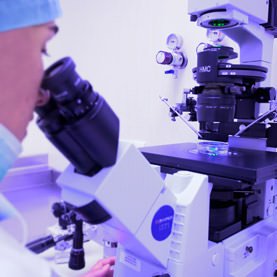
The Fertility and Assisted Reproduction Center of HC Marbella International Hospital offers PGD procedures among a range of advanced laboratory techniques and fertility treatments.

Back to blog
In other news

25 April, 2018
Have you already decided to perform an assisted reproduction process?
Here are some tips: ...
[Continue reading ]28 August, 2017
ROPA Method in Marbella: FIV for married women couples
The ROPA method means a shared maternity, based on the “receipt of the couple’s eggs”. ...
[Continue reading ]