



21 August, 2026
Infertility and assisted reproduction treatments represent a challenge that goes beyond the medical dimension

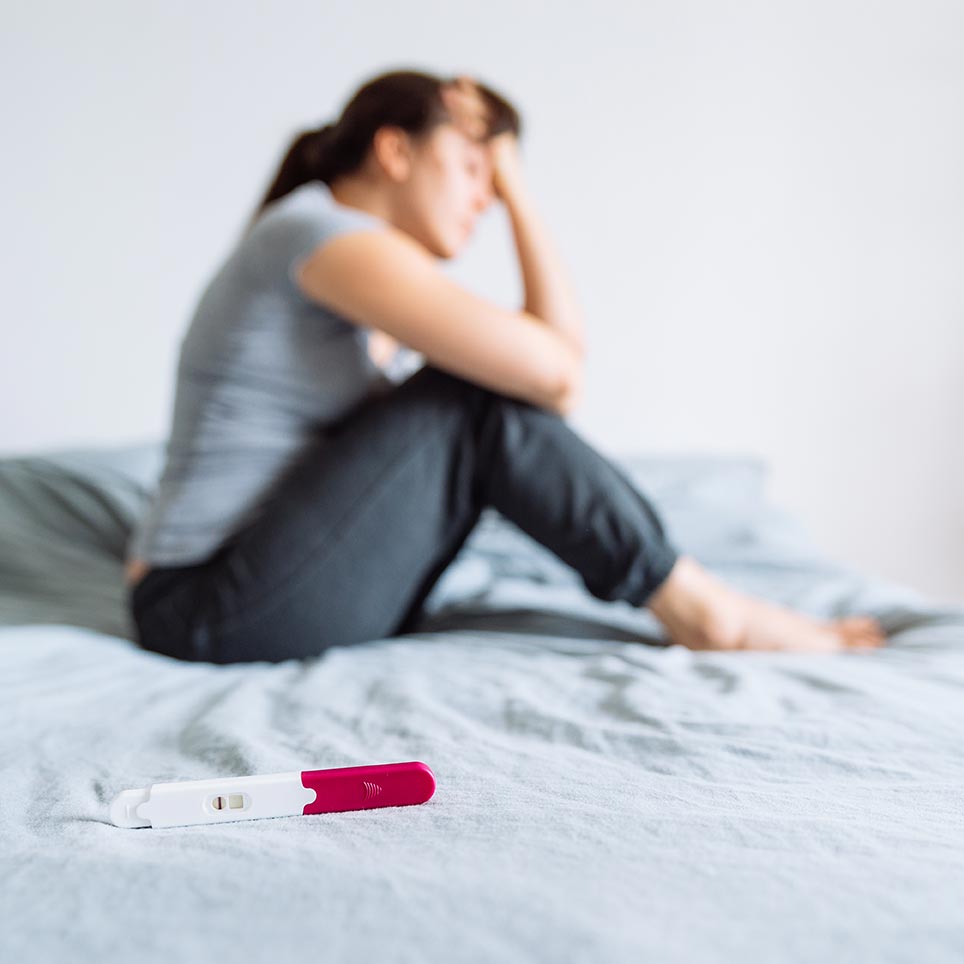
Uncertainty, procedures, expectations and the difficulty in controlling the outcome can generate concern and anxiety throughout the process.
Reproductive anxiety can be understood as the range of concerns and emotional responses related to fertility, diagnosis and the different stages of treatment. Scientific evidence has shown that anxiety, depression and a reduced quality of life are common in both women and men undergoing fertility treatment.[1]
A comprehensive approach to assisted reproduction must therefore address both clinical outcomes and the psychological wellbeing of patients.
Scientific evidence: prevalence and psychological impact
1. Anxiety is common during assisted reproduction treatments
A meta-analysis published in 2025, which included 40 studies and over 16,000 participants, estimated that anxiety symptoms were present in approximately 48 per cent of women and 28 per cent of men during assisted reproduction treatments.[2]
These figures reveal that the emotional impact of infertility is not exclusively experienced by women and that both partners may experience psychological difficulties during the process.
2. Anxiety and infertility: avoiding patient-blaming
One of the most important messages for patients is to distinguish between cause and effect.
Infertility and its treatments can lead to uncertainty, stress and a sense of loss of control. However, the available evidence does not support the claim that anxiety is the cause of infertility, nor that being anxious in itself causes the failure of IVF or ICSI treatment.
Although some research has found associations between certain levels of anxiety and reproductive outcomes, the evidence does not establish a clear causal relationship. For this reason, remarks such as ‘you need to relax for the treatment to work’ can be counterproductive and place an unnecessary burden of responsibility on the patient.
Looking after your emotional health is important for personal wellbeing, not because it is necessary to achieve a state of relaxation in order to become pregnant.

3. Different stages of treatment can trigger different emotional responses
Each stage may present its own specific stressors:
Diagnosis and start of treatment
Potential emotional impact: Uncertainty, sadness or frustration.
Stimulation and egg collection
Potential emotional impact: Concern regarding response to treatment and procedures.
Embryo culture
Potential emotional impact: Anticipation and uncertainty regarding development.
Embryo transfer
Potential emotional impact:Hope, fear and uncertainty.
The two-week wait
Potential emotional impact: Concern and bodily hypervigilance.
Negative result
Potential emotional impact: Sadness, frustration and the need to readjust expectations.
Psychological needs may vary throughout the course of treatment, which is why support should be adapted to each stage.[3]
The two-week wait, in particular, can be emotionally difficult due to the period of uncertainty that precedes the result. During this time, it is common to pay closer attention to physical sensations. However, symptoms such as tiredness, breast tenderness or abdominal discomfort can have various causes and do not, on their own, confirm or rule out pregnancy.
4. When treatment does not have the expected outcome
A negative result or a pregnancy loss can lead to sadness, frustration, anger or a sense of loss.
These reactions should not be downplayed. When distress persists or significantly interferes with daily life, it may be advisable to seek specialist psychological support.
How can you look after your emotional wellbeing during treatment?
It is not about eliminating anxiety completely, but about having the resources to manage it.
Some strategies that may help include:
- Inform yourself through reliable sources, avoiding constantly searching for information on social media and forums.
- Avoid constantly interpreting symptoms, especially during the two-week wait, and rely on the tests recommended by the medical team.
- Maintain activities and social relationships so that fertility does not take over your daily life..
- Talk to your partner about different ways of coping with treatment and set boundaries with those around you..
- Seek psychological support when anxiety or sadness significantly interfere with sleep, work, relationships or the ability to cope with treatment.

Psychological interventions can help reduce symptoms of anxiety and improve wellbeing during fertility treatments. A recent systematic review and meta-analysis found significant benefits in terms of anxiety and highlighted cognitive behavioural therapy and counselling as among the most effective interventions.[4]
The recommendations of the ESHRE (European Society of Human Reproduction and Embryology) also highlight the importance of integrating psychosocial support into routine care for individuals undergoing infertility treatment, identifying those who may require specialised support.[3]
Person-centred reproductive care
Assisted reproduction entails much more than medical procedures and laboratory results. Behind every treatment lie expectations, uncertainties and emotions that also need to be addressed.
Looking after emotional wellbeing is also part of reproductive healthcare.
Referencias
1. Braverman AM, Davoudian T, Levin IK, Bocage A, Wodoslawsky S. Depression, anxiety, quality of life, and infertility: a global lens on the last decade of research. Fertility and Sterility. 2024;121(3):379–383.
2. Prevalence of psychological problems among individuals and couples during assisted reproductive technology (ART) treatment: a systematic review and meta-analysis. 2025. Meta-analysis of 40 studies and 16,042 participants.
3. Gameiro S, Boivin J, Dancet E, et al. ESHRE guideline: routine psychosocial care in infertility and medically assisted reproduction—a guide for fertility staff. Human Reproduction. 2015;30(11):2476–2485.
4. The efficacy of psychological interventions for infertile women: a systematic review and meta-analysis. 2025.

Back to blog
In other news

12 August, 2025
FISH TECHNIQUE IN SPERM CELLS
Fluorescent in situ hybridisation (FISH) in sperm cells has been a complementary diagnostic tool in ...
[Continue reading ]19 July, 2021
How does the ovarian reserve affect an IVF treatment?
The ovarian reserve is the number of eggs a woman has at a specific time. The measurement of the ova...
[Continue reading ]