



From genetic grief to a new way of becoming a mother or father
When an individual or a couple begins a fertility treatment process, it is usually undertaken with expectations, desires and images built around future parenthood, including the possibility of sharing a genetic link with the child they envisage. When, due to different circumstances, oocyte, sperm or embryo donation appears as the only alternative to be able to build a family, not only is it necessary to adapt to a medical decision, but also to go through a deep emotional process. In this context, complex and sometimes contradictory emotions may arise, related to the need to readjust expectations and reconstruct the meaning of motherhood and fatherhood as previously imagined.
Endocrine disruptors: what you need to know to protect your health
In recent years, there has been a growing interest in understanding how certain chemicals in our environment can influence the body. These include endocrine disruptors, compounds that can interfere with the hormonal system. Despite scientific advances, much remains unknown about their impact on human health.

Artificial intelligence in the IVF laboratory
Artificial intelligence (AI) is making significant inroads into healthcare, and assisted reproduction is no exception. In recent years, numerous software platforms have emerged that analyse images and data from oocytes or embryos, and in this article, we will explain how they can contribute to decision-making in the in vitro fertilisation laboratory. An AI model serves as a ‘trained expert’ inside the computer: it learns by reviewing many real cases from the past (medical records, images, results, etc.) and extracts patterns to estimate probabilities in a new case. For example, using the patient’s age and a photo of an embryo, it can calculate the probability of achieving a pregnancy. It is not magic, nor does it predict the future: it provides estimates, not certainties.
Endometriosis and Fertility: Surgery, Before or After?
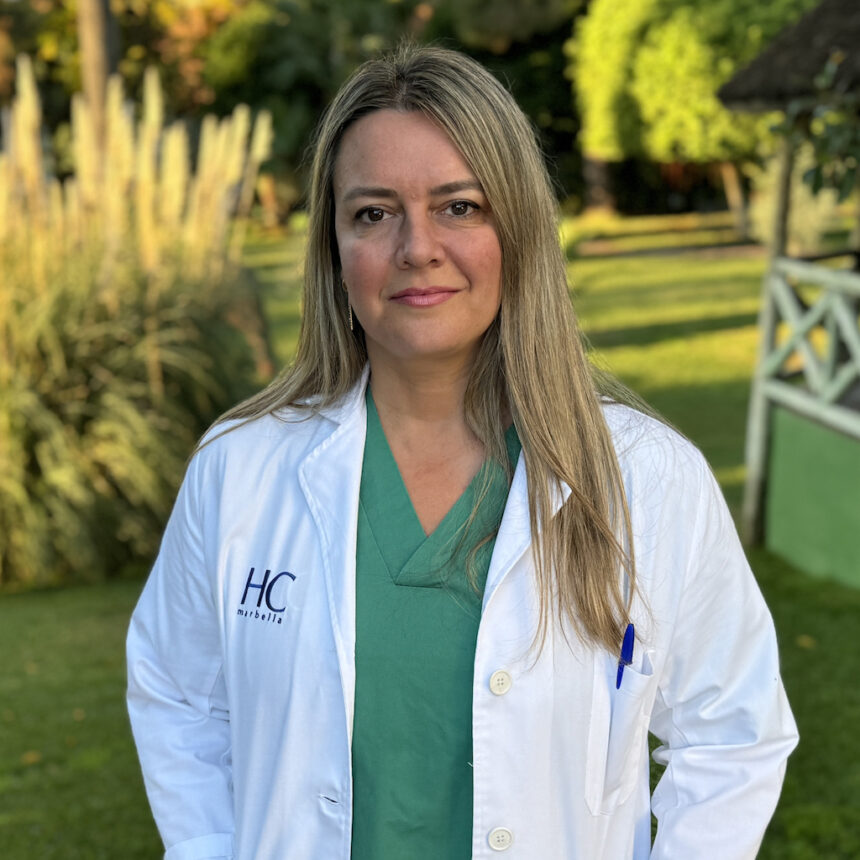
Hello, I am Dr Almudena Utrera, and as a gynaecologist specialising in fertility, one of the conditions I see most often in my practice and which raises the most questions is endometriosis. If you have been diagnosed, I know you probably have a whirlwind of questions and concerns: about pain, about your quality of life and, above all, about your chances of becoming a mother.

Male infertility: has there been an increase in cases over the last few years?
Nowadays, it is relatively common to have friends or family members with problems in achieving pregnancy, and even we can be affected at any given time.

FISH TECHNIQUE IN SPERM CELLS
Fluorescent in situ hybridisation (FISH) in sperm cells has been a complementary diagnostic tool in the study of male infertility over many years, but its clinical application has been under review in recent years.
ESHRE Congress 2025
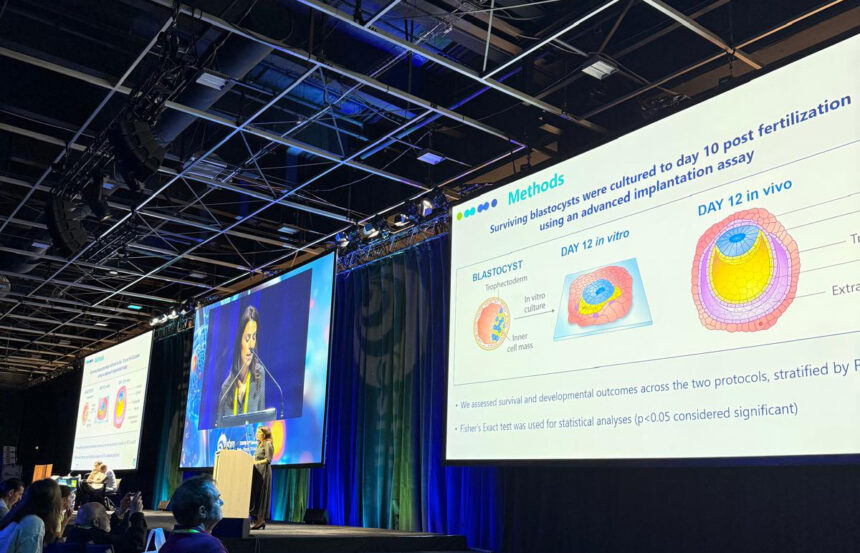
During ESHRE 2025, several papers were presented analysing the impact of Fast Warming techniques on previously vitrified blastocysts. This protocol consists of a shorter and more intense thawing process compared to the standard one, resulting in significantly reduced exposure times to rehydration solutions and cryoprotectants.
Anabolic steroids
Today we are going to talk about a subject that has certainly gained a lot of attention in the sports and health world: anabolic steroids. If you have ever wondered what they are, why some people use them and what the associated risks are, this article is for you.

Visits we love!
Look at such a beautiful little princess who came to see us!

Preimplantation genetic testing
In the field of assisted reproduction, Preimplantation Genetic Testing (PGT), formerly known as ‘preimplantation genetic diagnosis (PGD)’, has emerged as a crucial resource for increasing success rates and reducing the risk of transmitting hereditary genetic diseases.