




Which are the basic tests to determine female fertility?
Hormonal analysis This is one of the main tests performed to find out whether there are any fertility problems in a woman or not. Through a blood test we check the main hormones, such as: FSH, LH, prolactin, estradiol, progesterone and anti-Müllerian hormone (AMH). This test allows us to know if there are hormonal problems causing an alteration in the menstrual cycle and find out about the woman’s ovarian reserve. Ultrasound In a female fertility study a transvaginal ultrasound is performed, to observe the uterus and ovaries, verifying that there is no uterine malformation or any other anatomical complications, that may lead to fertility problems, and also an antral follicle count (RFA) will be performed during the first days of the cycle. The results of the antral follicle count and the AMH value will tell us about the status of the ovarian reserve. Karyotype Although this is not one of the basic tests, it is advisable, in order to evaluate the female´s chromosomal structure and discard any possible chromosomal alterations that may be the origin of sterility or infertility. It is carried out from a blood extraction (the same as for a regular blood analysis), for which it is not necessary to be fasting. It will take between 15 to 20 days for the results to be ready.
Which male fertility tests we have available?
After a year of having unprotected sex without getting pregnant, the couple may have infertility problems and, therefore, both man and woman should have the necessary fertility tests.
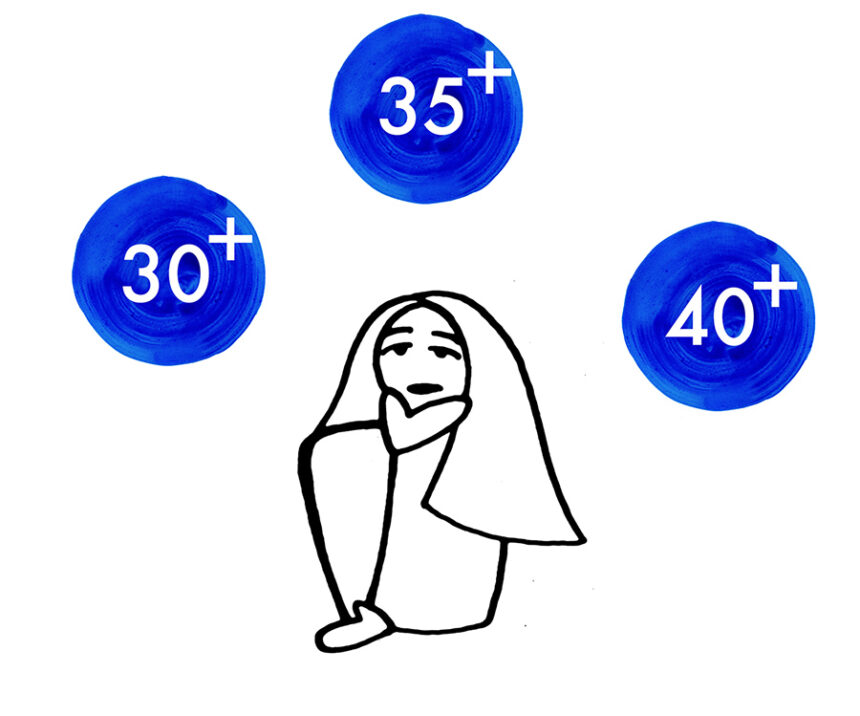
40, the new age to become a mom
According to a study carried out by INE (National Statistics Institute), in Spain, in this past year of 2020, 5,972 women aged 40 gave birth compared to 3,830 babies born to 25-year-old mothers. For a few years we have been seeing how the statistics are reversed: if in the past, the average age to become a mother was 25 years old, now as a result of labor and social changes, women delay their motherhood. The delay of maternity carries some benefits, without a doubt, such as: psychological maturity, in most cases the step can be given by greater economic, personal and work stability, etc. But as we already know, the mother´s age can also represent possible problems, such as the decrease in the chances of getting pregnant naturally, due to the quality and quantity of oocytes.
Women around 38 years of age are at the limit to achieve a pregnancy using their own ovules
The age of the woman is one of the most important factors that determine the chances of achieving a pregnancy using her own eggs. Numerous published studies show us how the quantity and quality of the ovules decreases after the age of 35 and this means that women around 38 years of age are at the limit to achieve a pregnancy using their own ovules.
Men also have a biological clock
When it comes to having children, not only the mother’s age matters. The biological clock is ticking for them too. That is why it is important to preserve the fertility of man
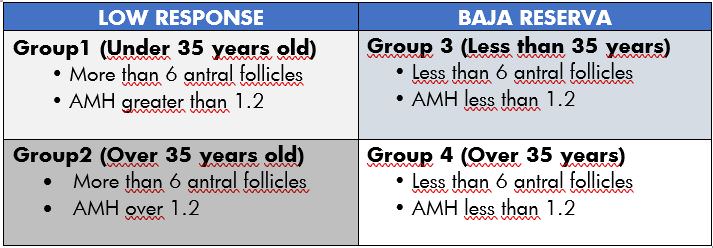
The low ovarian response
A few days ago, we were talking about the ¨Low Reserve¨ (few eggs); Today we will talk about ¨Low Response¨, often confused, even in medical literature, with the previous one, but with a different origin and treatment. The ¨Low Response¨ is that situation in which, having sufficient quantity of ovules available in the ovaries, but these do not respond adequately to the treatment; the end result is what makes this situation similar to the “Low Reserve”: few eggs available.

How does the number of eggs decrease over the years?
The amount of a woman’s eggs decreases from the moment of birth, over the years, until menopause is reached. It is estimated that women are born with approximately 2 million eggs. This figure decreases over time and when they reach adolescence, they have about 40,000 eggs. Eventually, only about 400 become ovulated, usually 1 for each menstrual cycle.
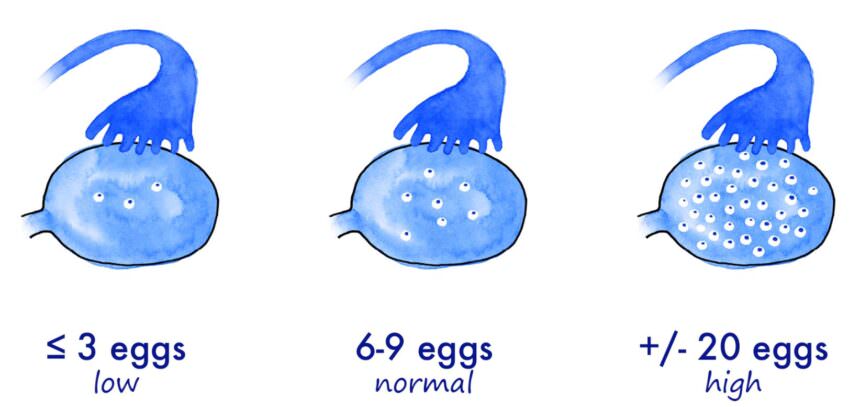
What is low ovarian reserve?
The ovarian reserve could be defined as the number of available eggs that a woman has at a given moment in her life. We should not confuse low ovarian reserve with low ovarian response, which we will talk about in the next chapter.
The egg quality
The good quality of the eggs is essential to be able to have a baby, since, to transform into a healthy embryo; the egg needs to have the appropriate chromosomes and the ability to combine them with those of the sperm.

Can I be a father after a vasectomy?
Around 2% - 6% of men who have undergone vasectomy request a reversal. What are the options?